

Last Updated: November 21, 2026
Quick Summary
You do not need to speak Spanish yourself to teach Spanish to homeschoolers. Use audio that models pronunciation, an open-and-go lesson plan, and a short routine, moving from listening and speaking first to reading and writing last. Three fifteen-minute sessions a week are enough to start.
- Start with listening and speaking, and add reading, writing, and grammar only after the ear is trained.
- Focus early lessons on high-frequency words like greetings, numbers, colors, family, food, and weather.
- Teach one shared lesson to all ages and vary only what each child produces, not the input.
- Keep sessions to about fifteen minutes, three times a week, rather than one long lesson.
- The See it and Say it Level 1 bundle is a two-year curriculum costing 84.97 as a digital box set.
Table of Contents
- How to Teach Spanish to Homeschoolers Without Speaking It Yourself
- What Parents With No Spanish Background Actually Need
- The 80/20 Rule for Home Language Learning
- Choosing and Comparing Homeschool Spanish Curriculum Options
- How to Teach Spanish to Children of Different Ages Together
- Building Conversation Practice, Pronunciation, and Listening Skills
- Hands-On Activities, Games, Songs, and Screen-Free Learning
- A Sustainable Weekly Schedule With Sample Lessons
- Measuring Progress and Setting Realistic Outcomes
- Frequently Asked Questions
How to Teach Spanish to Homeschoolers Without Speaking It Yourself
You do not need to speak Spanish to teach Spanish to homeschoolers. What you need is a sequence, a routine, and materials that do the pronunciation work for you.
Most guides get this wrong, handing you a workbook and vocabulary list on day one. That is backwards. Language acquisition starts with the ear, not the page, and a parent who cannot pronounce a word can still press play on an audio track and learn alongside their children.
What Parents With No Spanish Background Actually Need
Three things carry a non-Spanish-speaking parent: audio that models pronunciation, a lesson plan that needs no prep, and a routine short enough to survive a busy week. Everything else is optional.
A common mistake is buying a program that assumes a fluent teacher. If the manual expects you to explain grammar in Spanish, you will stall by week three.
If you are unsure where to begin, our learning path flowchart helps you match a level to your family's situation before you buy anything.
The 80/20 Rule for Home Language Learning
Most early payoff in Spanish comes from a small set of high-frequency words and phrases. Greetings, numbers, colors, family members, food, weather, and simple questions cover a large share of everyday conversation.
Save irregular verb charts for later. A child who can say "me gusta" and "¿dónde está?" is already communicating, and that early win builds the momentum that carries a family through an academic year.
Phase 1: Listening and Speaking First
Spend the first weeks on listening and speaking only. Play audio, repeat aloud together, and act out what you hear. No writing, no worksheets. This mirrors how toddlers acquire a first language, and it works just as well for a nine-year-old.
Phase 2: Vocabulary Building and Short Phrases
Once the sounds feel familiar, add picture cards and short phrases. Lay out five to eight cards, name them aloud, then build a sentence. Games and charades keep this phase light, and repetition happens naturally because it feels like play.
Phase 3: Reading, Writing, and Grammar
Reading and writing come last, only after the ear is trained. Short daily exercises, fill-in-the-blanks, and matching pages reinforce what your children already understand by sound. Grammar arrives as patterns they recognize, not rules they memorize.
Choosing and Comparing Homeschool Spanish Curriculum Options
A good homeschool Spanish curriculum is one the parent can run without prior Spanish, that covers multiple ages, and that fits your budget and screen-time preferences. Compare options against those three criteria before you compare price tags.
| Curriculum Type | Parent Prep | Ages Served | Screen Time | Typical Cost |
|---|---|---|---|---|
| Flash card + audio set | Low | Whole family | None | Moderate, one-time |
| Video course | Very low | Grade level specific | Daily lessons | Subscription or per lesson |
| Printable workbook + audio | Low | One student per book | None | Low |
| Activity calendar | None | All ages | None | Low, one-time |
Our own See it and Say it Flip Flop Spanish Level 1 bundle is a two-year, open-and-go curriculum built on the Charlotte Mason method, with picture cards, audio tracks, games, and skits for the whole family. For a wider set of picks to weigh against each other, see our roundup of the best homeschool Spanish curriculum options.
How to Teach Spanish to Children of Different Ages Together
One curriculum can serve a four-year-old, an eight-year-old, and a fourteen-year-old if you adjust the output, not the input.
Keep the input shared and vary the response. The four-year-old points at the card and says one word. The eight-year-old says a short phrase. The fourteen-year-old writes the sentence and explains it back to you.
Young children (roughly ages 4-7)
Keep sessions to ten or fifteen minutes and lean almost entirely on listening, speaking, and movement. Picture cards, songs, charades, and simple commands work better than any worksheet at this age. Expect single words and short phrases, and do not correct pronunciation harshly, model it again and let imitation do the work.
Elementary students (roughly ages 8-11)
This is the sweet spot for a family curriculum because children can follow a short lesson, play a game, and begin copywork and simple reading in the same session. Add short phrases, question-and-answer practice, and copywork of words they already know by ear. Keep grammar implicit: patterns they recognize, not rules they memorize.
Teens (roughly ages 12-14 and up)
Teens can work more independently and should read, write, and answer in full sentences. They can handle explicit grammar, verb conjugation, sentence structure, gender and agreement, because they can see the pattern behind it. Many families use the teen years to aim toward a high school language credit, which means adding regular writing, short readings, and consistent conversation practice.
Heritage learners and mixed-language families
If a child already hears Spanish at home from a relative or a bilingual parent, the approach shifts. Heritage learners often understand far more than they can produce, so the priority is speaking and writing rather than vocabulary introduction. Do not start them at the beginning of a beginner curriculum just because their reading and writing lag their listening, place them by skill, not by age.
Students with different learning needs
A child who struggles with reading, attention, or working memory benefits from the same listening-first sequence, just with shorter sessions and more repetition.
For families with a broad age spread, our video Spanish lessons for homeschoolers ages 8-14 let older students work independently while younger siblings join the family set.
Watch out: do not let the oldest child become the default teacher for the younger ones.
Building Conversation Practice, Pronunciation, and Listening Skills
Conversation practice grows out of repetition, not improvisation. Set aside ten minutes where the whole family speaks only in Spanish using words you already know. It will be clumsy at first.
Pronunciation improves through imitation. Play a short audio segment and have everyone repeat it. Listening practice works the same way: let your children hear native pacing before you ask them to produce it.
Hands-On Activities, Games, Songs, and Screen-Free Learning
Games do the heavy lifting in a home language program. Charades, card matching, bingo, and simple songs turn review into something children ask for.
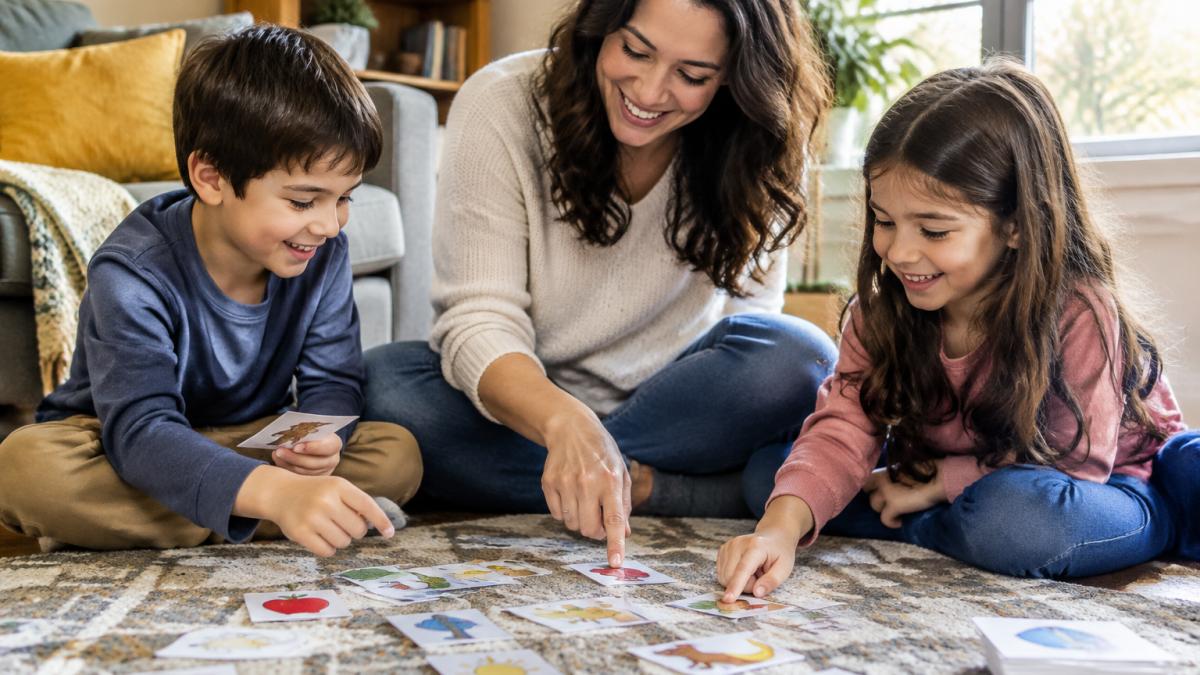
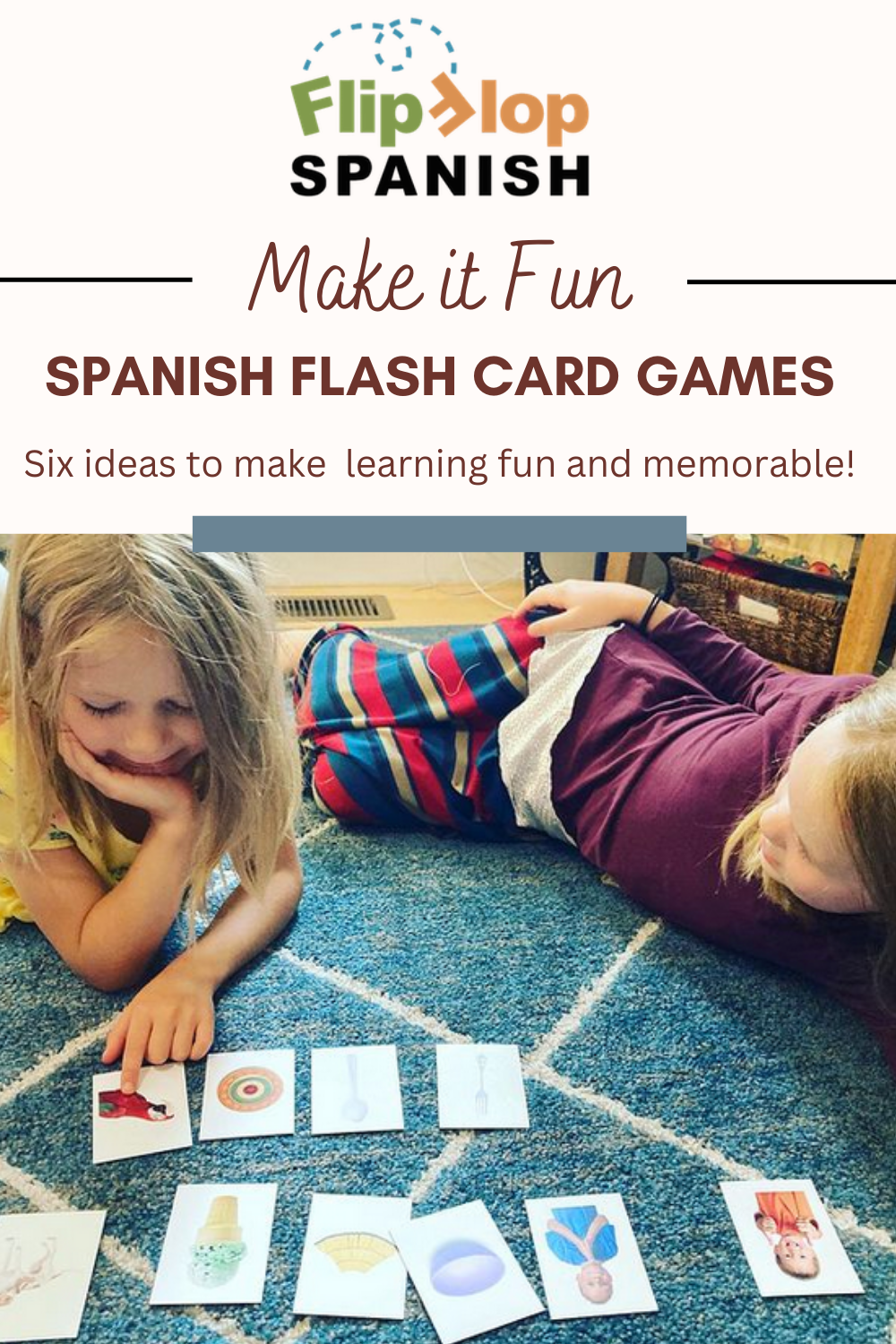
Our Spanish bingo games are a ready-made option for a co-op or a rainy afternoon. You can also grab our free flash card game eBook for a month of game ideas at no cost.
A Sustainable Weekly Schedule With Sample Lessons
Three short sessions a week beat one long one. Each session runs about fifteen minutes, which is short enough that nobody dreads it and frequent enough that review happens naturally.
- Monday: Lay out the week's cards, play the audio, repeat aloud together.
- Wednesday: Play a game or act out the phrases as charades.
- Friday: Review the cards, then read the lesson page aloud to your children.
That is the entire week. Our See it and Say it Level 1 lessons include three sessions per weekly lesson, with audio that leads the instruction.
Measuring Progress and Setting Realistic Outcomes
Comprehension typically arrives before speech, and speech before writing, which is the general pattern of language acquisition. Most homeschool parents worry because their child understands more than they can say. That is not a problem; it is the expected order of language acquisition. Measure each skill on its own terms instead of waiting for a vague sense of fluency that may take years to arrive.
Set outcomes by skill, not by course completion
A finished workbook is not evidence of learning. Write down, at the start of the year, one realistic outcome for each of the four skills. For listening, a reasonable first-year goal is following a short series of spoken instructions and understanding familiar questions. For speaking, it is answering basic questions and using short phrases without prompting.
Assess listening and speaking without a test
Listening and speaking are the hardest to measure because they leave no paper trail. Use simple, repeatable checks. Can your child point to the correct picture when you say a word? Can they follow a two-step instruction in Spanish, such as picking up a card and putting it on the table?
Assess reading and writing with short, low-stakes tasks
Once reading and writing begin, keep assessment as light as the instruction. Ask your child to read a short passage of words they already know by ear, then ask one comprehension question. For writing, give a word bank and ask for three or four sentences about a familiar topic, family, food, weather.
Use placement checks to decide when to move up
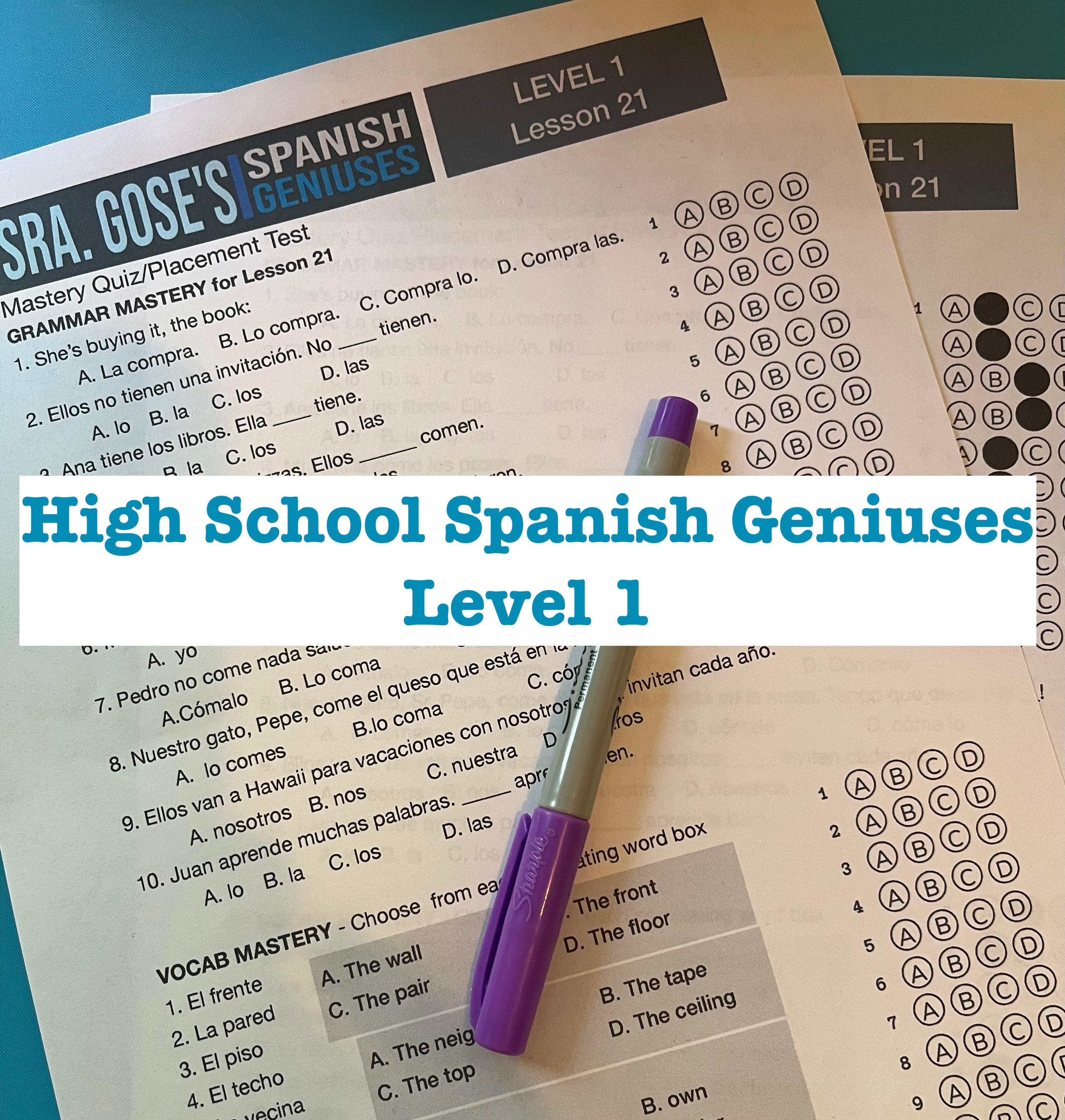
A placement test is most useful at transition points: before you start, at the midpoint of the year, and before you move to the next level. Our free placement test and mastery quizzes give you a concrete way to check level and decide when to move up. The rule of thumb is to move on when the child can do the current level's tasks comfortably, not perfectly.
Keep a simple progress log
You do not need a formal gradebook. A one-page log with a row per week and a column for each skill, listening, speaking, reading, writing, is enough. Note what the child did, not a score.
Language progress varies widely by age, exposure, and temperament, and a child who is quiet in month three may be conversational by month nine. Measure against your own starting point, not against someone else's finish line.
Frequently Asked Questions
What is the most effective way to teach Spanish to homeschoolers?
Short, frequent lessons beat long weekly sessions. Aim for three 15-minute sessions per week that mix listening, speaking, and hands-on play. Start with spoken phrases before written grammar, and review the same vocabulary across several weeks so it sticks. Programs built on the Charlotte Mason method, like Flip Flop Spanish, follow this pattern: lay out picture cards, play the audio track, and practice together. Children retain more when they hear, say, and act out words rather than filling in worksheets.
How can I teach Spanish if I'm not fluent myself?
You do not need to speak Spanish to teach it. Choose an open-and-go curriculum with audio so a native speaker models pronunciation for both of you. Your job is to press play, lay out the cards, and practice alongside your children. Flip Flop Spanish was built for exactly this: parents with no Spanish background follow the audio instructions and learn the vocabulary at the same time as their kids.
How do I teach Spanish to children of different ages together?
Pick a family-level curriculum and adjust the output you expect from each child. A 4-year-old might repeat single words, an 8-year-old builds short sentences, and a 14-year-old writes full answers and studies grammar. Flip Flop Spanish's Whole Family Spanish Level 1 is designed for this: one lesson, one audio track, and every age participates at their own level. Older students can add the workbook or move to Spanish Geniuses video courses for high school credit.
How often should homeschoolers study Spanish?
Three short sessions per week is the sweet spot for most families. Each Flip Flop Spanish lesson includes three sessions of about 15 minutes, so one lesson covers a full week. Consistency matters more than duration: 15 minutes three times a week beats a single 90-minute block. Add casual practice during meals or car rides to reinforce vocabulary. Review the previous week's words before starting new material.
Can homeschoolers learn Spanish online and still get speaking practice?
Yes. Video lessons with printable activities cover vocabulary and grammar, and optional live sessions add real conversation. Spanish Geniuses offers video lessons for ages 8-14 with printable activities coded by age, vocabulary labs, and review videos. A family subscription is $35 per month for the whole household, or you can buy individual lessons for $10 each. Live weekly speaking and game sessions give students a chance to use what they have learned with other learners.
What are some easy Spanish activities for homeschool families?
Flash card games, charades, and skits work well because they get everyone moving and speaking. Label household objects with Spanish words, cook a simple recipe while naming ingredients, or use the free Flip Flop Spanish Flash Card Game eBook for more than a month of game ideas. The Spanish Fun Activity Calendar adds one word per day with a pronunciation guide, which suits busy families who want a five-minute lesson at the breakfast table.
How do I measure progress in homeschool Spanish?
Track what your child can do, not how many pages they finish. Every four to six weeks, note whether they can greet someone, ask a question, or describe an object without prompting. Keep a simple list of mastered phrases and review it quarterly. For high schoolers, save samples of written work and record speaking samples to document progress toward a transcript credit. Flip Flop Spanish's Spanish Geniuses program is described as fulfilling high school speech credit requirements.
